Every question below is one we are asked regularly by Defender owners, and every answer is written out in full rather than hidden behind a click. If your question is not here, the contact form above reaches the same people who wrote these.
Will accessories listed for the Defender 110 also fit the 90 and the 130?
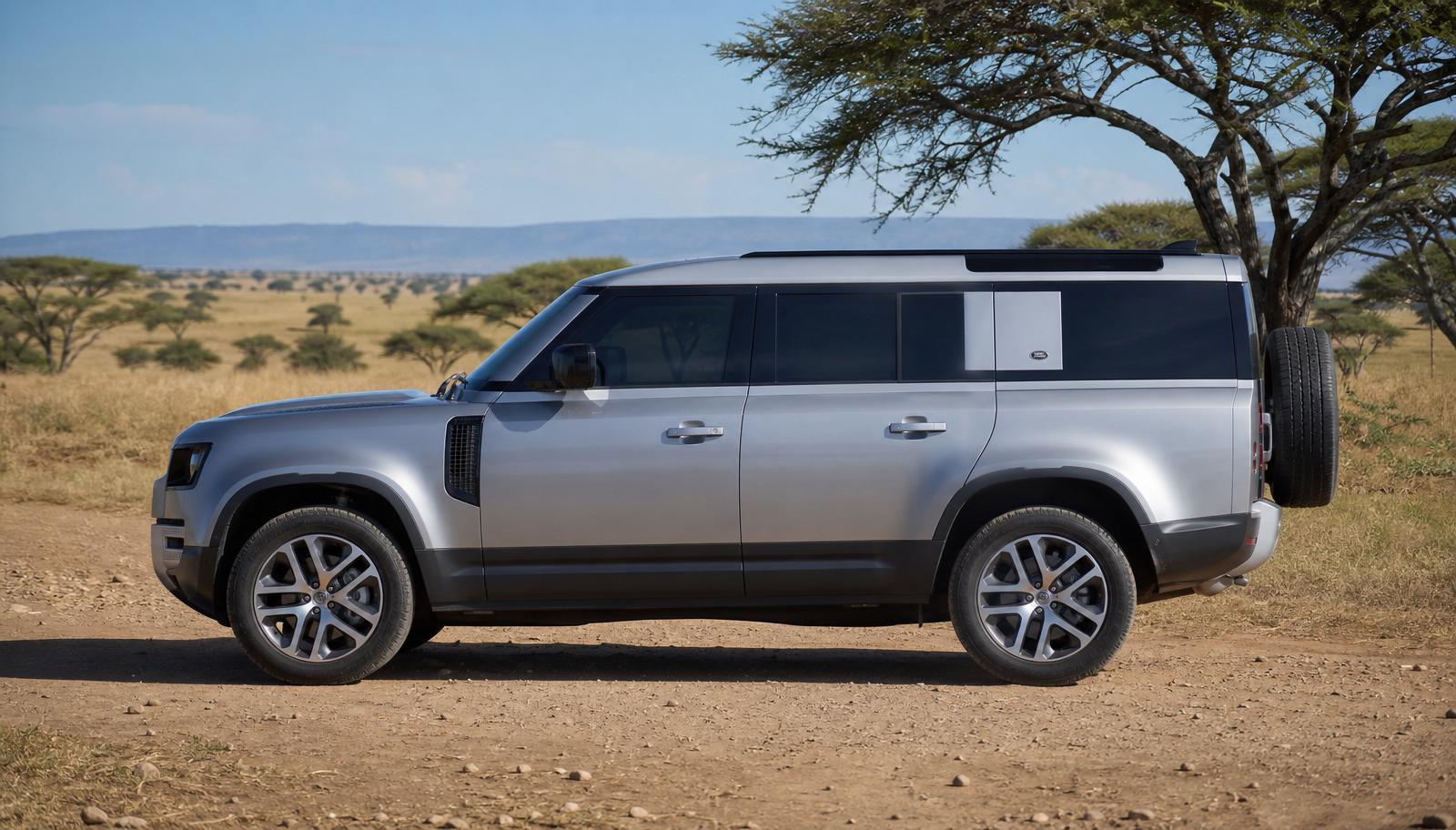
Sometimes, but never assume it. The three body lengths share a great deal — the front structure, the doors forward of the B-pillar, the roof rail mounting positions and most of the electrical architecture are common — so front bars, bonnet protection, front floor mats, snorkels, A-pillar light mounts and wheel and tyre packages generally cross over without modification. Anything that relates to the wheelbase or the rear overhang does not. Side steps and rock sliders are length-specific because the sill run differs. Roof racks and platforms are length-specific because the rail spacing changes. Loadspace liners, drawer systems, canopies, rear bars and second-row mats are all specific to the body they were designed for. Our listings state the exact bodies each part suits, and where a manufacturer supplies one part number across multiple lengths we say so explicitly rather than leaving you to infer it. If you are ordering several items for a 130 in particular, check each line individually, because 130-specific tooling arrived later in the aftermarket and some ranges still only cover 90 and 110.
Does fitting aftermarket accessories void my Land Rover warranty?
Fitting an accessory does not void your whole vehicle warranty, and in most markets a manufacturer cannot refuse a claim simply because a non-genuine part is present. What it can do is decline a claim for a failure that the accessory caused or contributed to. That distinction is the whole game. A bolt-on set of floor mats will never be blamed for a gearbox fault. A poorly installed auxiliary electrical system spliced into the factory harness can absolutely be blamed for a body control module fault, and reasonably so. The practical protections are straightforward: prefer parts that mount to factory points without drilling, prefer wiring that draws from a fused accessory feed rather than tapping an existing circuit, keep the original components so the vehicle can be returned to standard, and keep the installation invoice. For suspension and structural changes, use an installer who will certify the work. If you are still inside the warranty period and unsure, ask us before ordering and we will tell you honestly whether a given part carries any risk.
How much payload do I actually have left once I start adding accessories?
Less than most owners expect, and this is the single most common planning mistake we see. Take the gross vehicle mass from your vehicle's plate and subtract the kerb weight for your exact specification — not the brochure figure for the base model, because a well-optioned Defender with air suspension, a big wheel package and third-row seating can be well over a hundred kilograms heavier than the headline number. What remains is everything: passengers, fuel, luggage, the dog, and every accessory you bolt on. A steel front bar and winch is commonly seventy to ninety kilograms. A canopy or hard lid with a drawer system can be a hundred. A roof platform with a rooftop tent is another eighty before anyone climbs into it. Four adults are three hundred. It adds up frighteningly fast, and an overloaded vehicle handles worse, brakes longer, wears its suspension out early and is uninsured in the event of an incident. Work out your budget in kilograms before you work it out in currency, and choose aluminium over steel wherever the duty allows.
Can I fit a lift kit to a Defender with air suspension?
Yes, but not with springs. On an air-sprung Defender the ride height is determined by the vehicle's own control module reading height sensors at each corner, so you cannot simply install taller components. The correct approach is a lift module that interfaces with those sensors and shifts the entire ride-height envelope upward by a defined amount, typically around forty millimetres, while leaving the vehicle's levelling logic, access height, and off-road and wading programmes functioning normally. Good modules are reversible in minutes and do not store fault codes. Modules that simply deceive the sensors are the ones to avoid: they can leave the vehicle permanently in an off-nominal attitude, confuse the terrain response system, and cause the compressor to run more than it should. Whichever route you take, remember that raising the vehicle changes headlight aim, driveshaft angles and the centre of gravity, and in most jurisdictions a height increase beyond a defined threshold requires an engineering certificate to stay road legal. Tell your insurer either way, and have the headlights reset afterwards.
What is the difference between a side step and a rock slider, and which do I need?
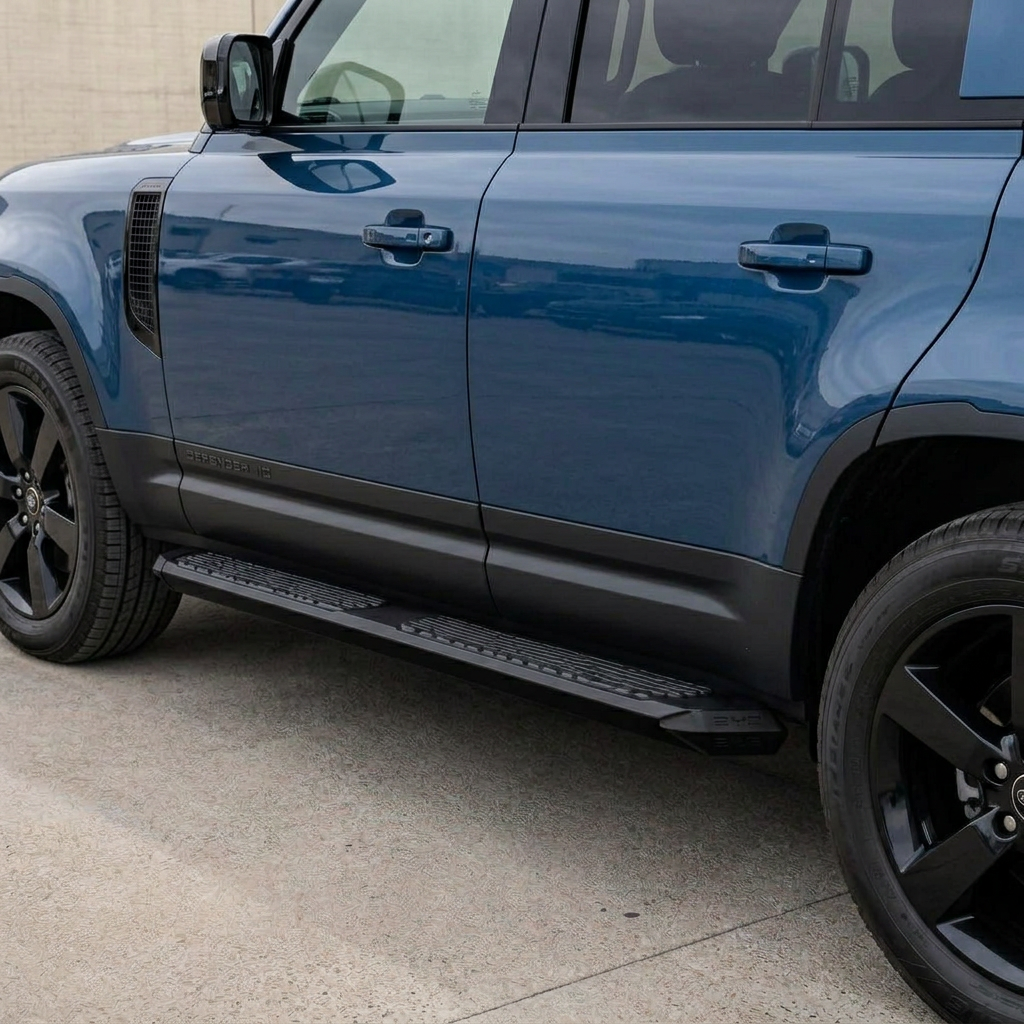
They look similar and do completely different jobs. A side step is an access aid. It is a tread surface hung off the body at a height that makes climbing into a raised Defender comfortable, and it is engineered to carry the weight of a person stepping onto it. A rock slider is a structural member, usually a box section or heavy tube tied into reinforced underbody mounting points, engineered to take the entire weight of the vehicle resting on a rock or a ledge without deforming. If you drive green lanes, rocky tracks or anywhere the sill can contact terrain, you need a slider, because a step in that situation will fold upward and take the door skin with it. If your Defender lives on tarmac and the problem is simply that shorter passengers struggle to get in, a step is the right, lighter and cheaper answer. Electric deploying steps sit in between: excellent for access, they retract to preserve breakover angle, but they are not protection. Every listing on this site states clearly which category the product falls into.
How much can I safely put on the Defender's roof?
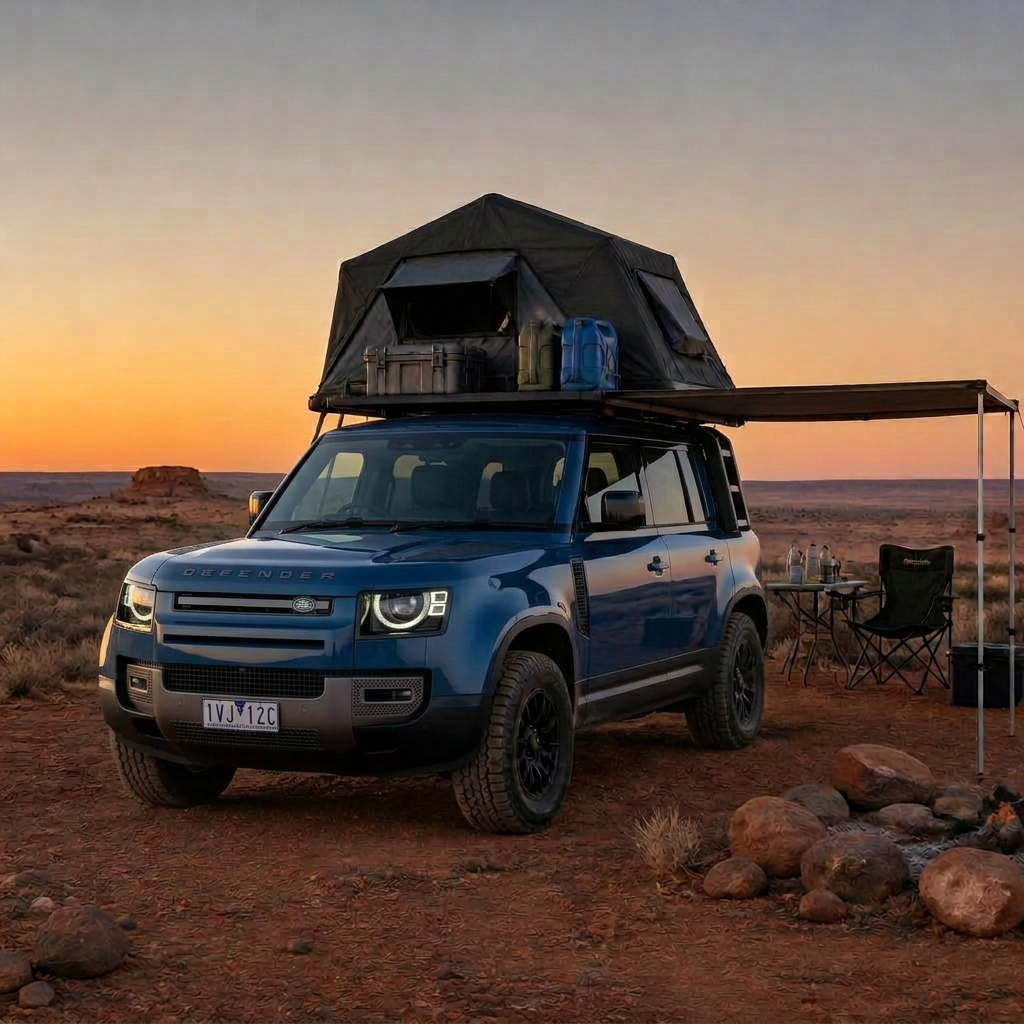
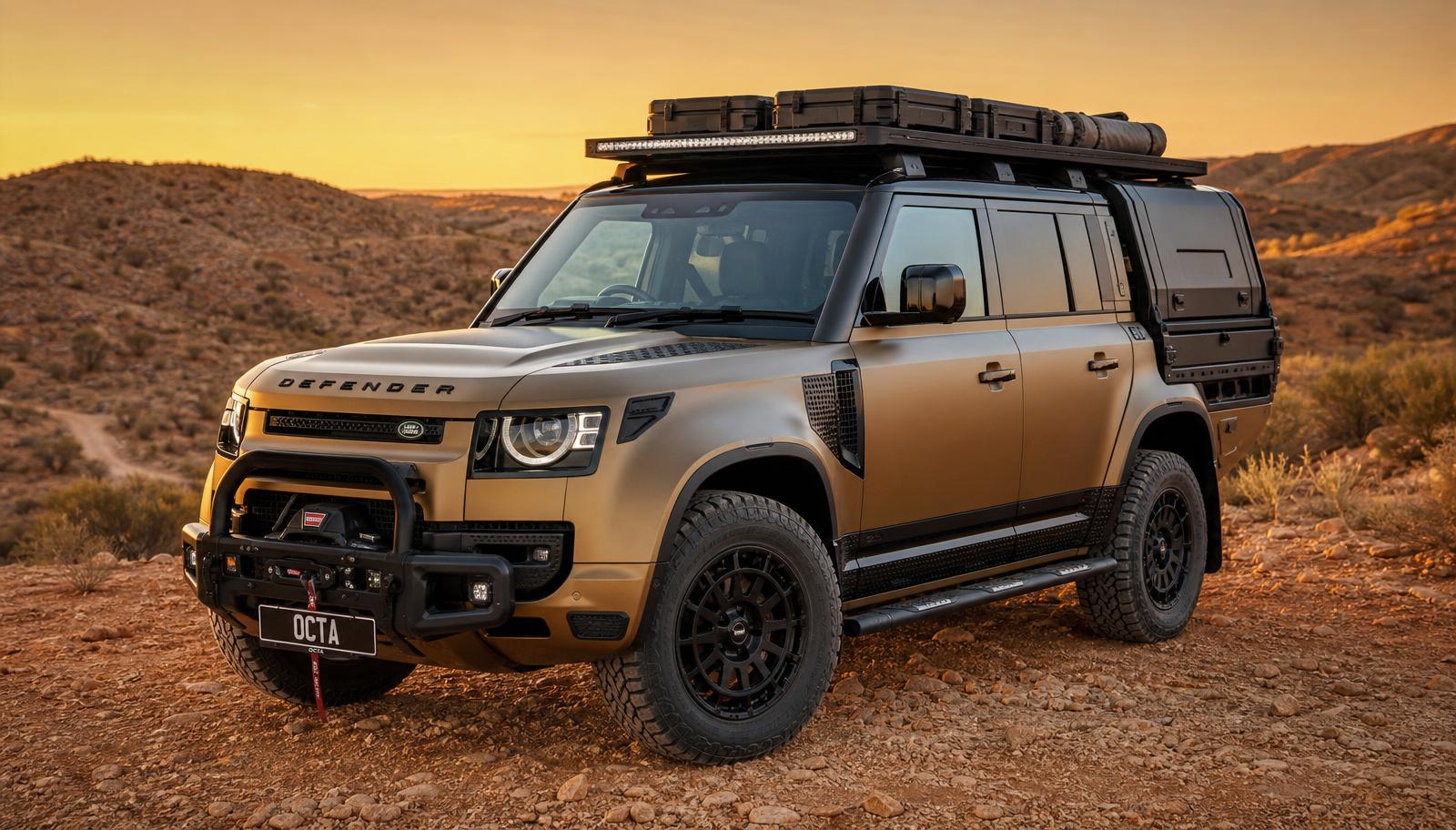
There are two separate numbers and confusing them causes real damage. The dynamic roof load is the maximum weight the roof may carry while the vehicle is moving, and it includes the weight of the rack or platform itself. It is a relatively modest figure — typically well under a hundred kilograms — because a mass sitting that high changes the roll behaviour of the vehicle dramatically and loads the rails in cornering and braking. The static roof load is the maximum the roof can carry when the vehicle is stationary and level, and it is much higher, which is why a rooftop tent holding two sleeping adults is permissible even though those same two adults could not ride up there. When you plan a roof setup, subtract the rack weight first, then the tent, then anything mounted to the sides such as an awning, jerry cans, recovery boards or a shovel. Whatever remains is your usable allowance. Also remember that everything on the roof reduces your remaining payload and, in practice, costs several percent in fuel consumption.
Do I need a DC-to-DC charger, or will a simple relay work for a second battery?
You need a DC-to-DC charger. The modern Defender uses a variable, computer-managed charging strategy that adjusts alternator output for efficiency, which means the system voltage moves around considerably during normal driving. A traditional voltage-sensitive relay makes its decisions purely on that voltage, so on this platform it will disconnect when it should be charging, connect when the alternator is barely producing, and in the worst case allow a depleted auxiliary battery to draw down the starter battery. A DC-to-DC charger takes whatever input the vehicle offers, isolates the two batteries completely, and delivers a controlled multi-stage charge profile matched to the auxiliary battery chemistry. That is essential if the auxiliary battery is lithium, which needs a specific voltage profile and will not charge properly or safely from a raw alternator feed. Size the charger to the battery — twenty-five to forty amps covers most builds — fuse both ends of every cable run, and choose cable gauge for the length of the run as well as the current. Every product in our electrical category is specified with this in mind.
Which tyre size gives the best off-road improvement without upsetting the vehicle?
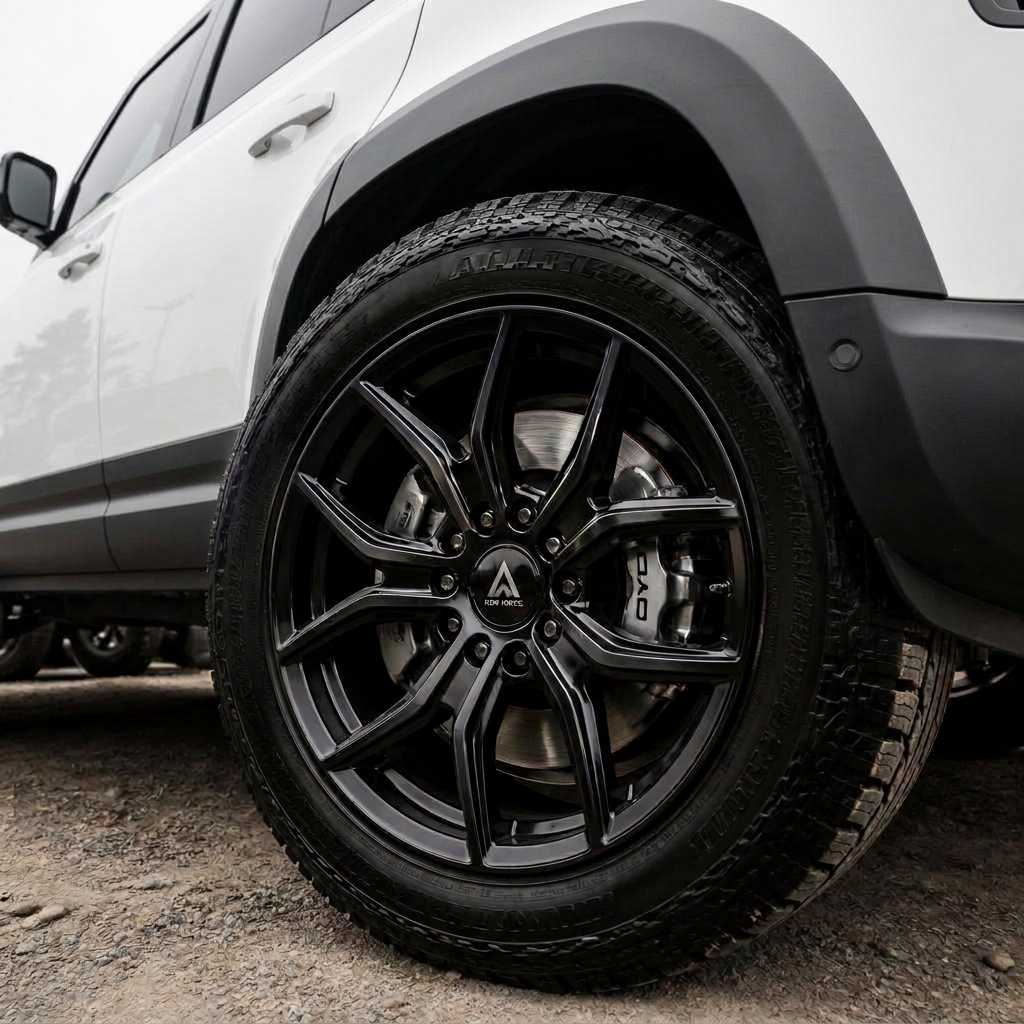
In almost every case, keep the overall rolling diameter close to standard and gain sidewall by reducing wheel diameter. A Defender delivered on twenty- or twenty-two-inch wheels has very little air between the rim and the ground, which means airing down does almost nothing for the contact patch and every sharp edge is a rim strike waiting to happen. Moving to an eighteen- or nineteen-inch wheel with a correspondingly taller tyre keeps the rolling radius within a couple of percent of standard, so the speedometer, the transfer case ratios, the stability control and the driver assistance systems all continue to read correctly, while giving you a sidewall that can deform around obstacles and be pressure-adjusted meaningfully. Going larger overall is possible but brings arch clearance issues at full lock and articulation, alters gearing and often needs a lift and arch work to be legal. Check load index before anything else: a Defender at gross weight on a hot motorway needs a properly rated tyre, and an under-rated one chosen for its tread pattern is a genuine safety problem.
Will a bull bar interfere with the Defender's radar, cameras and airbags?
It can, and this is the most important question to ask before buying frontal protection for this generation of vehicle. The front of a modern Defender contains cruise-control radar, surround-view cameras, parking sensors, pedestrian-protection provisions and a crash structure whose deformation characteristics determine when the airbags fire. A bar that has been designed, crash-tested and type-approved specifically for the platform accounts for all of that: the radar aperture is preserved or the sensor is relocated to a validated position, sensor cut-outs are correctly placed, and the mounting system is designed to deform in a controlled way. A generic or untested bar can blind the radar, disable the parking system, and in a collision alter the timing of airbag deployment in a way that reduces occupant protection. Weight and gauge are secondary to approval. When you look at a listing on this site, check the stated approvals for your market, the fitted weight, whether sensors are relocated or reused, and whether the vehicle's front camera calibration needs to be re-run afterwards by a technician.
Is drilling required to fit most Defender accessories?
For the great majority of what we sell, no. Land Rover provisioned this vehicle generously with hidden threaded points: reinforced bosses along the sill for steps and sliders, mounting positions for roof rails and cross bars, accessory rail provisions along the flanks, and load-securing points in the rear compartment. A well-designed accessory uses those points, which means installation is reversible and no permanent modification is made to an aluminium body panel — an important consideration, because aluminium repairs are neither cheap nor invisible. Where drilling is required, it is usually for a specific reason such as a winch cradle, a heavy expedition rack or a rear bar that ties into the chassis rails, and in those cases the manufacturer supplies a template and specifies the fastener and any corrosion protection needed at the cut edge. Every product listing on this site states plainly whether the fitting is bolt-on to existing points, bonded, or requires drilling or trimming. If you are leasing the vehicle or intend to return it to standard, filter for bolt-on and bonded products only.
Can I fit these accessories to an older, classic Defender?
Some of them, and it depends entirely on the category. The classic Defender built up to 2016 is a completely different vehicle: a ladder-frame chassis, coil springs, flat aluminium panels and essentially no electronics. Parts designed around the current vehicle's monocoque, air suspension, sensor suite and networked electrical architecture will not transfer. What does transfer is generic in nature — auxiliary lighting, DC-to-DC chargers, inverters, recovery equipment, air compressors, jerry can holders and most camping hardware are all defined by their electrical or mechanical interface rather than by the vehicle. Anything shaped to the body — steps, sliders, bars, flares, mats, seat covers, canopies, racks — is specific to the generation it was designed for. Our listings identify the platform explicitly. If you own a classic Defender and want to know whether something crosses over, contact us with your model year and body style before ordering rather than after, and we will confirm it against the manufacturer's fitment data instead of guessing from a picture.
How long does a typical accessory installation take?
It varies enormously and the honest answer for each product is on its listing. As a rough guide: floor mats and console organisers are minutes with no tools. Seat covers are twenty to forty minutes per row and mostly a matter of patience with the tensioning straps. Mud flaps, badge changes and bonded trim are under an hour with basic hand tools, assuming careful surface preparation. Side steps and rock sliders are typically two to three hours for a pair because the fasteners are torqued to specification and the alignment matters. Auxiliary lighting with a supplied harness is two to four hours depending on how neatly you route the cable and whether a switch panel is being installed. A dual-battery system with a DC-to-DC charger, distribution and solar input is a full day and worth paying a specialist for. Front bars are half a day plus sensor calibration. Suspension work is a full day and requires an alignment afterwards. Add time on your first attempt, work to the torque figures, and never leave a job half-finished on a vehicle you need on Monday.
Do you ship internationally, and who pays duty?
We ship worldwide to more than a hundred and forty countries from a consolidated warehouse, and most orders are dispatched within forty-eight hours of payment clearing. Shipping cost is calculated at checkout from the dimensional weight of the actual items, so bulky low-weight products like canopies and racks are priced honestly rather than by a flat guess. Import duty, import VAT or GST and any customs brokerage fee are the responsibility of the receiving customer and are set by your own country, not by us. We declare goods accurately at their real value, because under-declaring is fraud and it invalidates the transit insurance that protects you if a pallet is damaged. For large or heavy items such as bars, canopies and wheel sets we quote freight separately and will often consolidate several items into one shipment to reduce the total. Delivery timescales range from a few days within Europe and the United Kingdom to two or three weeks for remote destinations. Tracking is issued on dispatch for every order without exception.
What is your returns policy if a part does not fit?
If a part does not fit the vehicle described in your order, we cover the return freight and either replace it or refund it in full, including the original shipping. That policy exists because we verify fitment physically before listing anything, so genuine mismatches are rare and we would rather absorb the occasional cost than have you take a gamble. What we ask in return is that you check the fit before installing: hold the part in position, offer up the brackets, confirm the mounting points line up. Once a part has been drilled, cut, wired in, painted or fitted and driven, it cannot be returned as new. For change-of-mind returns you have thirty days from delivery on unfitted goods in original packaging, with return freight at your cost. Special-order items such as colour-matched panels made to your paint code cannot be returned unless faulty, and that is flagged clearly at the point of purchase. Faulty goods are handled under the manufacturer warranty stated on each listing, and we manage that claim on your behalf rather than sending you to the manufacturer.
Are LED light bars legal to use on public roads?
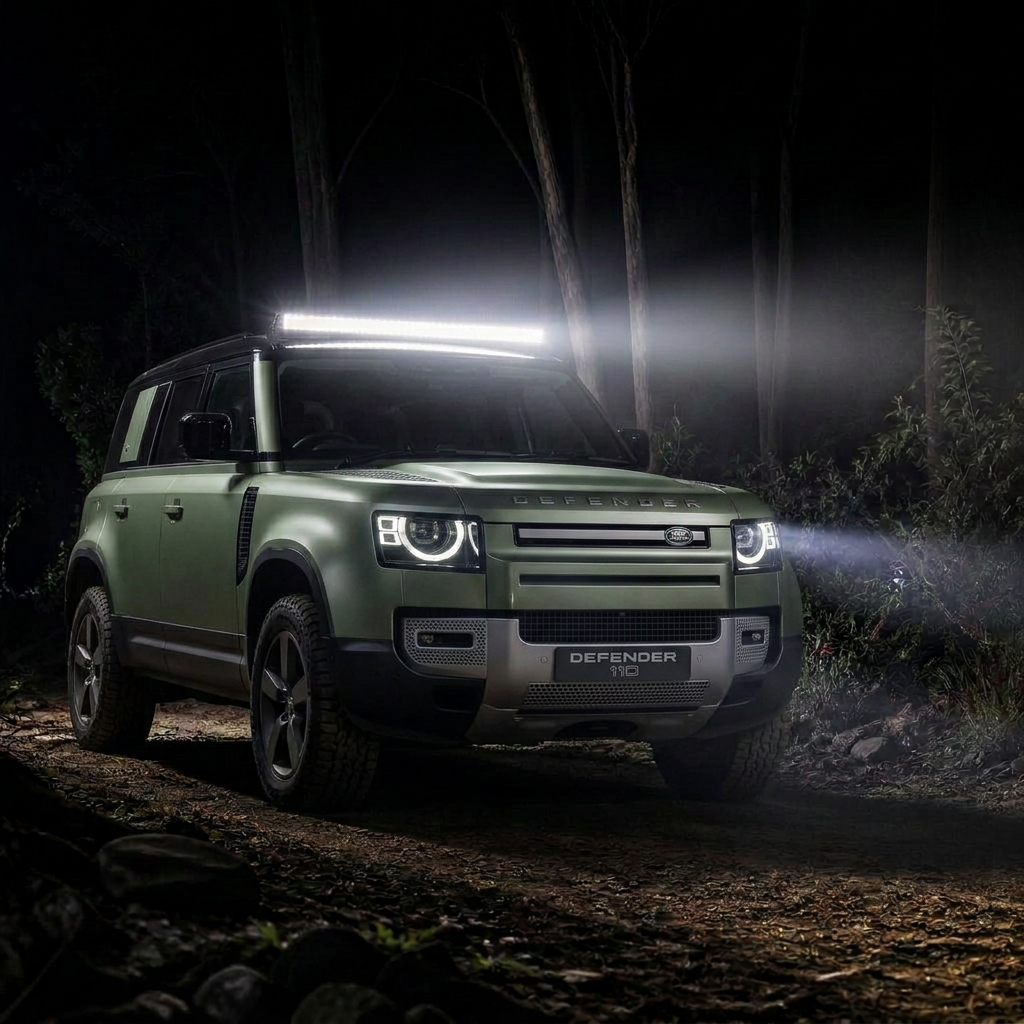
The lights themselves are legal to own and fit almost everywhere; using them on a public road is where the rules bite, and they vary significantly by market. The near-universal requirements are that auxiliary driving lights must be wired so they can only operate with the high beam and extinguish automatically when you dip, that they are mounted in a symmetrical pair about the vehicle's vertical centreline, that they do not obscure the number plate or any approved lamp, and that they carry the relevant approval mark for your jurisdiction. Some markets cap the number of auxiliary lamps or their combined reference value. Work lights, flood lights, rock lights and rear-facing camp lighting are generally permitted only when the vehicle is stationary, and using them while moving is an offence in most places. Bars mounted above the windscreen line attract additional scrutiny in some countries, and a few require a covering when the lamp is not in use. Our listings state the approvals each product carries, and the supplied harnesses are designed for compliant high-beam triggering.
Will a canopy or hard lid affect the reversing camera and parking sensors?
It can, and you should check before ordering rather than discover it on the driveway. The two things most often affected are the high-level brake light, which must remain visible for the vehicle to be roadworthy, and the rear camera, whose field of view can be partially obscured by a raised structure. Rear parking sensors are usually unaffected by loadspace hardware because they sit in the bumper, but a rear-mounted wheel carrier, ladder or tow step absolutely can trigger them constantly. Well-designed products for this platform address all three: they include a relocated or repeated high-level brake light where the original is covered, they are shaped to clear the camera's cone of vision, and where a component sits within sensor range they supply either a relocation kit or a switchable disable. Every listing in our canopies and armour categories notes which of these apply. If you are combining several rear accessories, tell us the full list and we will check the interactions together, because individually compatible parts occasionally conflict with each other.
How do I choose between genuine Land Rover parts and aftermarket alternatives?
Judge it category by category rather than adopting a blanket rule. Genuine parts are usually the better choice where integration with the vehicle's electronics or bodywork is the whole point: interior trim, factory-look styling components, tow electronics, anything that must colour-match exactly, and anything where a dealer will need to recognise it during a service. They are designed alongside the vehicle, they fit perfectly, and they carry a warranty that sits inside the vehicle's own. Aftermarket manufacturers usually win where the requirement is heavy-duty engineering that the factory never intended to supply: expedition roof platforms, rated recovery points, serious underbody plating, dual-battery systems, long-range fuel and water, drawer systems and true rock sliders. They also win on price for consumables like mats and covers, often with better materials. We stock both deliberately and label every product clearly, and we are happy to tell you when the factory item is simply the right answer and the aftermarket version is not worth the saving.
Do accessories affect the Defender's Terrain Response and wading depth?
Some do. Terrain Response works from wheel speed, throttle, steering, suspension height and traction data, so anything that changes rolling radius, ride height or the height sensor readings will change its behaviour. Keep the rolling diameter close to standard when changing wheels and the system remains accurate. Use an air suspension lift module that communicates properly with the height sensors and the off-road programmes continue to function. Deceive the sensors and the vehicle may refuse to enter certain modes or misjudge its own ride height. Wading depth is more physical: the quoted figure depends on the position of the air intake, the sealing of the electrical connections and the underbody aerodynamic trays. Removing a tray to fit plating, adding a snorkel, or fitting anything that changes the intake path all alter that figure — sometimes upward, sometimes down. Auxiliary equipment mounted low, such as a compressor or an inverter, needs an installation location that respects the water line. Our listings flag any product that affects intake, sensors or underbody sealing.
What is the best order to build a Defender if I am buying over time?
Start with the things that prevent damage, because every month you wait is a month the vehicle can be marked. That means floor and loadspace protection, mud flaps, underbody plating if you drive gravel, and sliders or steps depending on your terrain. Second, sort access and visibility: steps if you have not already, and auxiliary lighting if you drive unlit roads. Third, deal with tyres, because the corners change how the vehicle behaves more than anything else at that price and it is worth doing before you commit to a suspension specification. Fourth, address suspension, sized for the load the finished vehicle will actually carry, not the load it carries today. Fifth, add storage — canopy, drawers, roof platform — because these are heavy and you want the suspension already matched to them. Finally, electrical systems, sized once you know what the fridge, lighting and charging demands really are. Building in that order avoids buying brackets twice, keeps the vehicle usable throughout, and means each stage informs the next rather than constraining it.
Can I fit a winch to a Defender, and what capacity do I need?
Yes, on a bar system designed to carry one, which is the critical qualifier. A winch cannot be bolted to a standard bumper or to a bar that has no rated cradle, because the loads involved are measured in tonnes and they act through the mounting plate into the vehicle's structure. Choose a winch rated at roughly one and a half to two times the vehicle's gross mass, which for a loaded Defender means a twelve-thousand-pound class unit for most owners. Under-specifying is the common mistake: a winch working near its limit runs hot, draws enormous current and duty-cycles quickly. Synthetic rope is lighter, safer when it fails and easier to handle than steel cable, though it needs protection from heat and abrasion. Plan the electrical side properly with heavy cable, a correctly rated isolator and a battery that can deliver several hundred amps. Finally, remember the weight: a winch and cradle together add substantially to the front axle load, which affects ride height, steering feel and your remaining payload.
Do seat covers interfere with the side airbags?
They must not, and this is the one specification you should never compromise on. The Defender's front seats house side airbags that deploy through a designed tear seam in the outer bolster. Any cover fitted over that seam sits directly in the deployment path, so it must be manufactured with tested tear-away stitching along the corresponding line — thread and stitch pattern chosen to release at a specific force so the airbag exits cleanly and on time. A cover without that certification can delay or deflect deployment, which in a side impact is exactly the moment you need it to work perfectly. Cheap universal covers are the usual offenders because a generic pattern cannot place the tear seam correctly on a specific seat. Every seat cover we list states its airbag certification explicitly, and we do not stock uncertified covers for the front row at any price. Also check that the cover does not obstruct seat heating or ventilation outlets, and that it clears the seat-folding mechanism on second and third rows.
How do I keep an aluminium Defender body from corroding where accessories are fitted?
The risk is galvanic corrosion, which occurs when dissimilar metals are in contact in the presence of moisture and salt. Bolt a bare steel bracket directly to an aluminium panel, drive it through a salted winter, and the aluminium will corrode preferentially around the joint. Well-engineered accessories for this platform manage that already: stainless or coated fasteners, isolating washers or nylon spacers between dissimilar metals, and powder-coated or anodised contact faces. Where you drill, the cut edge exposes bare aluminium and should be treated with a suitable primer before the fastener goes in. Avoid trapping dirt and moisture in a joint — a bracket that sits flush against a panel with no drainage will hold water for weeks. If you live near the coast or drive salted roads in winter, rinse the underbody and the accessory mounting areas regularly, paying attention to slider and step mounts where spray collects. Our listings state the fastener material and whether isolating hardware is included, and we will supply it separately for any product that omits it.
Will bigger wheels and tyres make my speedometer read incorrectly?
They will if you change the overall rolling diameter, and the effect is proportional. Increase the rolling diameter by three percent and the vehicle travels three percent further per wheel revolution than the electronics believe, so your indicated speed reads low, your odometer under-records mileage, and every system that derives from wheel speed — cruise control, stability control, hill descent, the trip computer's fuel figures — is working from slightly wrong data. Reduce the diameter and everything reads high. Small deviations of one or two percent are within the tolerance the vehicle already allows and are not worth worrying about; anything beyond that is worth correcting. Correction is possible on this platform through a recalibration performed with the appropriate diagnostic equipment, and any competent specialist can do it. The simplest answer, though, is to choose your combination so the rolling diameter stays close to standard, which is exactly why dropping a wheel size while gaining sidewall works so well. Our wheel and tyre listings publish the calculated rolling diameter alongside the nominal size for precisely this reason.
Can accessories be fitted to a leased or company Defender?
Usually yes, provided everything can be removed and the vehicle returned to standard condition without evidence. Read your lease agreement first, because terms vary and some explicitly prohibit modification while others simply require the vehicle to be handed back as delivered. If you are free to proceed, restrict yourself to bolt-on and bonded products that use existing mounting points, and avoid anything requiring drilling, cutting, permanent wiring or paint. Floor and loadspace protection, seat covers, roof cross bars, bonded trim, mats, organisers and plug-in electrical accessories are all comfortably within scope. Keep every original component you remove — the standard mats, the trim pieces, the blanking plugs — in a labelled box, because the cost of replacing a missing factory part at hand-back is far higher than its worth. Photograph the vehicle before and after fitting. Bear in mind that bonded components leave adhesive residue that needs proper removal, and that any accessory increasing the vehicle's width or height may need declaring to the leasing company's insurer.
What maintenance do accessories need once fitted?
Less than you would think, but not none, and the failures that do happen are almost always fasteners rather than components. Re-torque every bolted accessory after the first few hundred kilometres and then at each service, because vibration and thermal cycling loosen joints and a loose slider mount will elongate its hole before you notice. Wash salt and mud out of the mounting areas of steps, sliders and bars, since these trap spray directly. Check auxiliary light lenses for stone damage and their harness connectors for water ingress at least annually. Inspect electrical terminals for corrosion and confirm fuses and isolators are still tight. Canopy and lid seals should be cleaned and treated with a rubber conditioner so they stay compliant rather than compressing permanently. Roof rack fasteners deserve particular attention because failure there is dangerous. Floor trays and seat covers just need washing. None of this is onerous — twenty minutes twice a year covers a fully built vehicle — but skipping it is how a well-specified build starts feeling rattly and second-hand.
How do I know a part will actually be in stock when I order?
Stock shown on the site is live against our warehouse, not an estimate, and it decrements as orders are placed rather than overnight. If an item is available, the listing says so and the dispatch window applies from payment. If an item is on backorder, that is shown before you add it to the basket along with the expected date from the manufacturer, and we would rather lose the sale than hide it and disappoint you at week three. Large items such as bars, canopies and full wheel packages are sometimes drop-shipped from the manufacturer, which is stated on the listing because the freight timeline differs. Colour-matched and made-to-order products always carry a build lead time. If you are planning a workshop booking around an order, contact us first and we will confirm the realistic arrival date against the current shipment schedule rather than the theoretical one. We will also hold an order and ship complete if you prefer everything to arrive together for a single installation day.
Can I get help planning a full build rather than buying parts one at a time?
Yes, and we would encourage it, because the most expensive builds are the ones assembled without a plan. Tell us the body length and model year, how the vehicle is actually used, how many people travel in it, whether you tow, what climate it lives in and what you want it to do that it currently cannot. We will come back with a staged specification: what to fit first, what each stage weighs, what it costs, what it does to your remaining payload, which items must be fitted professionally, and where you can reasonably save money. Where two products conflict — a rear wheel carrier and a particular tow arrangement, say, or a roof platform and a specific awning mount — we will flag it before you buy rather than after. There is no charge for this and no obligation, and if part of the honest answer is that your factory specification already does the job, we will say so. Email the support address on our About page with your details and expect a considered reply within two working days.